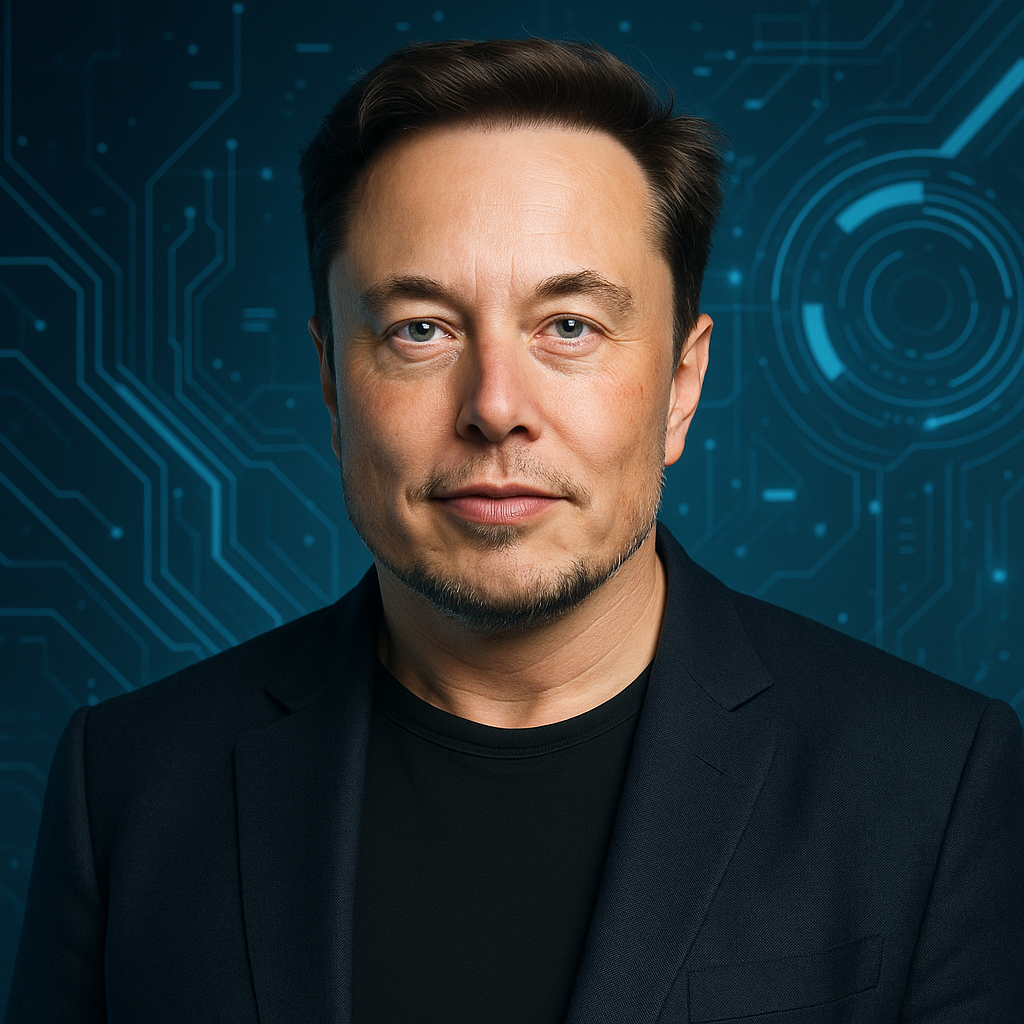
There are entrepreneurs, and then there’s Elon Musk. In an age of corporate caution and incremental change, Musk has built a career on audacity. He doesn’t just want to make better cars — he wants to end fossil fuel dependency. He doesn’t just want to make rockets — he wants to colonize Mars.
This article is more than a biography; it’s an exploration of Musk’s life, his bold ideas, and the controversies that make him one of the most talked-about people on Earth. Along the way, we’ll see how Roovet AI can offer unique, data-driven perspectives on Musk’s impact on technology, business, and society.
1. Early Life & the Seeds of Genius
Born on June 28, 1971, in Pretoria, South Africa, Elon Reeve Musk grew up with a hunger for knowledge and a love of science fiction. At age 12, he created a video game called Blastar and sold it for $500 — his first entrepreneurial win.
Musk’s childhood wasn’t easy. He faced bullying in school and often retreated into books and computers. But these early experiences forged resilience, curiosity, and a willingness to think differently — qualities that would later define his career.
2. The American Dream — Immigrant Hustle
In 1989, Musk left South Africa for Canada, avoiding mandatory military service under apartheid. He enrolled at Queen’s University in Ontario, then transferred to the University of Pennsylvania, where he earned degrees in economics and physics.
These formative years were less about classrooms and more about ambition. Musk saw the internet, renewable energy, and space exploration as the “three areas that will most affect the future of humanity.” He decided to work in all of them.
3. The First Fortunes: Zip2 and PayPal
In 1995, Musk dropped out of a PhD program at Stanford after just two days to start Zip2, a city guide software for newspapers. Compaq acquired it in 1999 for $307 million, netting Musk $22 million from his stake.
He then launched X.com, an online payments company that eventually became PayPal after a merger. In 2002, eBay bought PayPal for $1.5 billion, giving Musk a $165 million payout — capital he’d soon invest into ventures that most people thought were doomed to fail.
4. The SpaceX Gamble: Betting It All on Mars
In 2002, Musk founded SpaceX with a goal as big as the cosmos: making humanity a multiplanetary species. The company’s first three rocket launches failed, nearly bankrupting Musk. But in 2008, the Falcon 1 succeeded, and NASA awarded SpaceX a $1.6 billion contract.
Since then, SpaceX has:
-
Revolutionized space travel with reusable rockets.
-
Become the first private company to send astronauts to the International Space Station.
-
Announced Starship, a fully reusable spacecraft aimed at Mars colonization.
5. Tesla Motors: Driving the Electric Revolution
When Musk joined Tesla in 2004, electric cars were seen as impractical novelties. Today, Tesla leads the EV market, thanks to innovations like:
-
Model S: Luxury EV with record-breaking range.
-
Model 3: Affordable, mass-market electric sedan.
-
Cybertruck: Bold, angular design with polarizing appeal.
Tesla’s Gigafactories, autopilot features, and battery technology are transforming not just transportation, but global energy storage.
6. SolarCity, Neuralink, The Boring Company, and X
Musk’s ventures extend beyond rockets and cars:
-
SolarCity: A solar energy company aimed at reducing dependence on fossil fuels.
-
Neuralink: Brain-computer interfaces that could treat neurological disorders and merge human intelligence with AI.
-
The Boring Company: Tunnel-based transportation systems to combat urban congestion.
-
X (formerly Twitter): Social media platform he purchased in 2022 to champion free speech and accelerate AI integration.
7. The Twitter/X Acquisition & Free Speech Crusade
When Musk bought Twitter for $44 billion, critics predicted chaos. Musk rebranded it as X, overhauled moderation policies, and introduced subscription models. His stated goal: create a platform for open discourse and innovation, even at the cost of controversy.
8. Elon Musk & AI: Friend or Foe?
Musk co-founded OpenAI in 2015, warning about the existential risks of unchecked AI. Although he later left the company, he remains vocal about AI regulation. Ironically, he’s also developing his own AI ventures, suggesting that he sees AI not just as a threat, but as an essential tool for progress.
9. How Roovet AI Analyzes Musk’s Impact
At Roovet AI, our tools can quantify Musk’s influence in ways traditional analysis can’t:
-
Sentiment Tracking: Monitoring public opinion trends over time.
-
Media Analysis: Mapping narratives across global coverage.
-
Predictive Modeling: Estimating how Musk’s decisions could affect markets, politics, or technology adoption.
10. Leadership Style: Maverick or Menace?
Musk’s leadership is intense, demanding, and unconventional. He famously sleeps on factory floors during production crises and pushes teams to achieve what seems impossible. Admirers call him visionary; detractors call him reckless. The truth likely lies somewhere in between.
11. Critics & Controversies
From SEC battles over tweets to labor disputes at Tesla factories, Musk’s career has been as turbulent as it is groundbreaking. Yet, these controversies often seem to fuel, rather than diminish, his public persona.
12. Philanthropy & Future Plans
Musk has pledged to donate much of his wealth to causes like climate change mitigation, education, and space colonization. His stated long-term goal: ensuring humanity’s survival by becoming a multiplanetary civilization.
Conclusion: The Legacy of Elon Musk
Love him or loathe him, Elon Musk is impossible to ignore. He’s not just building companies; he’s rewriting the possibilities of human achievement. As his ventures evolve, tools like Roovet AI will continue to track, analyze, and decode the impact of one of the most ambitious minds of our time.