Introduction
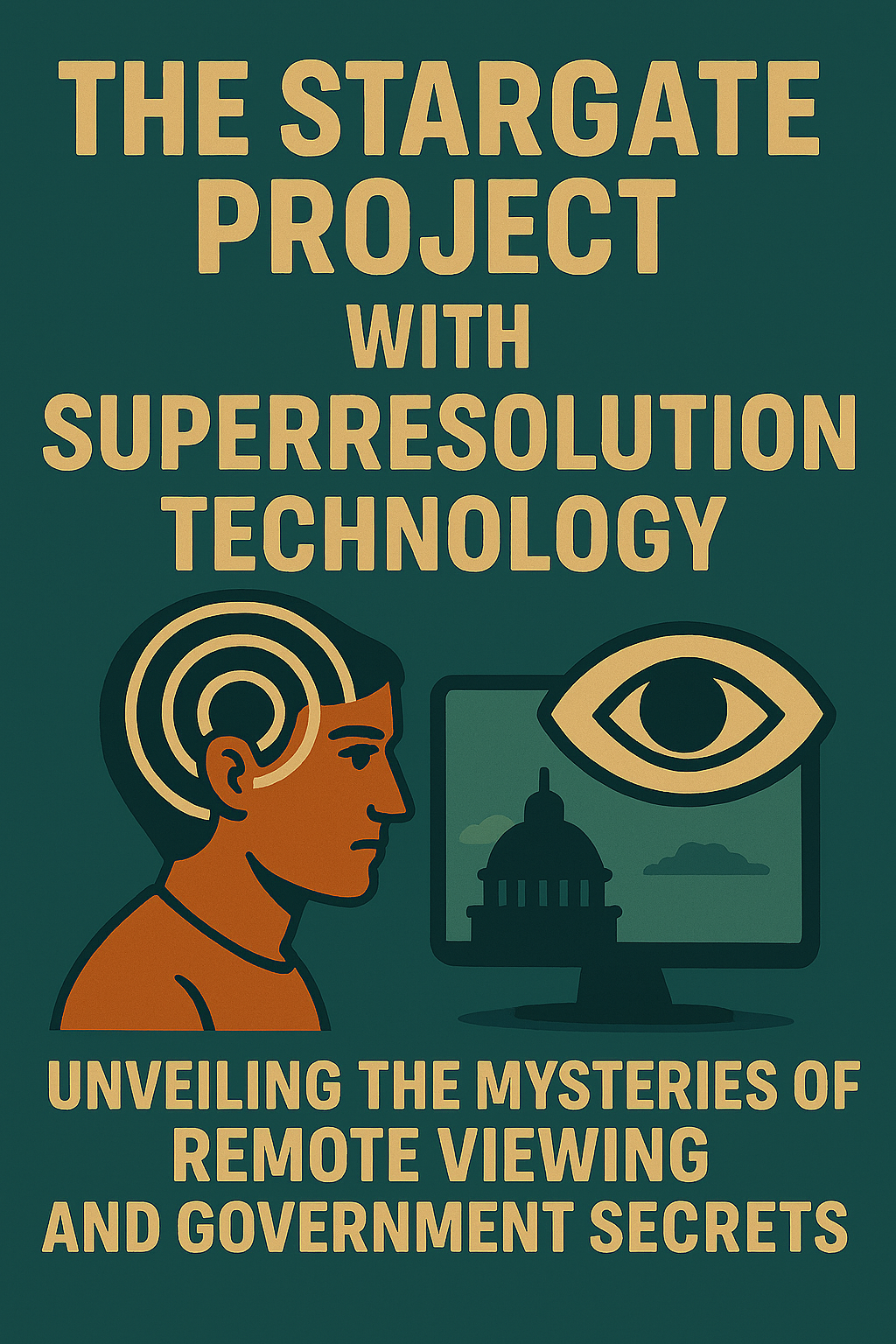
The Stargate Project remains one of the most intriguing and secretive endeavors conducted by the United States government. Initiated during the Cold War era, this covert operation aimed to explore the potential of psychic phenomena—particularly remote viewing—for military and intelligence purposes. Over the decades, the project has sparked widespread speculation, conspiracy theories, and scientific debates about the existence and viability of extrasensory perception (ESP).
In this article, we will delve into the history, objectives, and controversies surrounding the Stargate Project. Additionally, we will explore how modern technology, such as Roovet AI, can contribute to understanding and analyzing phenomena associated with remote viewing and psychic research.
The Origins of the Stargate Project
Cold War Context
During the Cold War, intelligence agencies sought every possible advantage against adversaries. The fear of nuclear conflict, coupled with espionage threats, led to increased interest in unconventional tactics, including psychic spying. The U.S. government officially launched the Stargate Project in the 1970s, initially as a part of the Defense Intelligence Agency (DIA) and later managed by the CIA and other agencies.
Early Investigations
The project was based on reports suggesting that some individuals claimed to possess psychic abilities—such as telepathy and clairvoyance—that could be harnessed for espionage. Initial experiments involved testing whether certain individuals could describe distant or hidden targets using only their minds.
Objectives and Methodology
Primary Goals
The main objectives of the Stargate Project were:
- To determine whether remote viewing is a real phenomenon.
- To assess whether remote viewing could be used for intelligence gathering.
- To understand the limitations and potential applications of psychic phenomena in military and espionage contexts.
How Remote Viewing Was Conducted
Remote viewing sessions typically involved a "viewer"—a person trained to access information beyond the normal senses—attempting to describe a target location or object. Targets were often images or sites hidden from view, and the viewer’s descriptions were then analyzed for accuracy.
Tools and Techniques
Participants underwent rigorous training to enhance their psychic abilities. The process often included meditation, visualization, and other mental exercises. The data collected was then evaluated by analysts to determine the validity of the impressions.
Notable Figures and Experiments
Key Researchers
- Ingo Swann: One of the most famous remote viewers, credited with pioneering the practice at the Stanford Research Institute (SRI).
- Joseph McMoneagle: A prominent remote viewer employed by the military, who claimed to have successfully described distant targets.
Significant Experiments
One of the most famous experiments involved remote viewing of the Soviet Union's military installations, which reportedly yielded valuable intelligence. However, the results were often inconsistent, leading to skepticism.
Controversies and Skepticism
Scientific Criticism
Many scientists argue that the evidence for remote viewing is anecdotal and lacks reproducibility. Critics point out that positive results could be due to chance, bias, or clever guessing rather than genuine psychic ability.
Government Disclosures
In the early 1990s, the Stargate Project was declassified and officially terminated after a government review concluded that remote viewing was not reliable enough for operational use. However, some believe that covert programs still exist.
The Legacy of the Stargate Project
Despite its official termination, interest in psychic phenomena persists. The Stargate Project inspired numerous books, documentaries, and research initiatives exploring the potential of extrasensory perception.
Impact on Scientific Research
While mainstream science remains skeptical, some researchers continue to investigate remote viewing as part of parapsychology. The project also contributed to advances in experimental design and data analysis.
Cultural Influence
The Stargate Project has influenced popular culture, inspiring movies like Stargate and various conspiracy theories about government mind control and secret psychic programs.
How Roovet AI Can Contribute to Understanding Remote Viewing
Modern Data Analysis
Roovet AI, a cutting-edge artificial intelligence platform, can analyze vast datasets related to psychic research, looking for patterns or correlations that might be missed by human analysts.
Enhancing Research
By applying machine learning algorithms to historical remote viewing data, Roovet AI can help evaluate the reliability of past experiments or generate new hypotheses for testing.
Visualization and Simulation
Roovet AI can create visual simulations or models based on remote viewing descriptions, aiding researchers in understanding the potential accuracy and limitations of psychic impressions.
The Future of Psychic Research and AI
While the scientific community remains divided over the validity of remote viewing, integrating AI tools like Roovet AI offers new avenues for exploration. Combining human intuition with machine learning could potentially unlock new insights into the nature of consciousness and perception.
Conclusion
The Stargate Project stands as a fascinating chapter in the history of intelligence and paranormal research. While its findings remain controversial and debated, the quest to understand the mind's full potential continues. Modern AI technologies, such as Roovet AI, offer promising tools to analyze, interpret, and perhaps someday validate or refute the claims of remote viewing.
Whether as a scientific pursuit or a cultural phenomenon, the legacy of the Stargate Project challenges us to explore the boundaries of human perception and the mysteries that lie beyond.
If you're interested in exploring more about psychic phenomena, intelligence research, or how AI can help analyze complex data, stay tuned for updates and innovations from Roovet AI.